Archive for the Photography category
August 29th, 2010

TRAVEL PHOTOGRAPHY
In a couple of days I’m presenting an overview of travel photography to students at The Art Institute of Seattle. I’ve included my outline here for those who are interested:
1. Introduction
Choosing a destination
Research
Packing light
Pacing yourself
Staying healthy
2. The Essential Ingredients
Culture/People:
Events
Arts and Crafts
Sports and Recreation
Food
Architecture:
Icons
Skylines
Attractions
Perspective
Geography:
Landscape
Weather - Sun/Moon/Water
Flora and Fauna
3. Logistics and other considerations
Transportation
Access/Being there
Language/Guides
Model/Property releases
Moving beyond the cliché - connecting to a sense of place
Colors/symbols/motion/shadows/textures/gestures/moments
Working with an Editor/Writer
Stills/Video – shoot lists, backing up media
4. Marketing - Don’t give it away.
Assignments/Commissions
Stock
Personal Work
Fine Art
Films/Books
Teaching/Writing
Public Relations
Join ASMP, read their business practices
August 19th, 2010

BACK FROM CALIFORNIA
Just home from two weeks away on a very rewarding trip. I want to thank all the people involved with making my exhibit and film in Salinas a success: Colleen Bailey, Deborah Silguero, Paul Van de Carr, Thom and Gail Steinbeck, Susan Shillinglaw, McIntosh & Otis, Tony Straka, James Johnston, Kurt Henze, and last but not least my wife, Andrea Wells. Thanks also to Curtis Autenrith and Chuck Miller for their support.
My next step is setting up a photo exhibit this winter and working with my agent, Bob Morton, to secure a book deal. Then it’s off to clear rights and set up the necessary PR. In the meantime you will see that I have added a link to my photography store where you can order prints and keep informed of my book’s progress. Lots of work ahead, and lots of work behind.
August 1st, 2010

30TH ANNUAL STEINBECK FESTIVAL
“Journeys - Steinbeck Around the World”
Thursday, August 5th - Sunday, August 8th
NATIONAL STEINBECK CENTER, SALINAS CALIFORNIA
“We do not take a trip. A trip takes us.” –John Steinbeck
This coming weekend, set out for the open road.
Your destination: The world - today and at key moments in history, with John Steinbeck as your guide. Eat, drink, and dream of far horizons. Go behind the Iron Curtain in the 1960s and wander through Moscow, Krakow, Budapest. Stand at the Berlin Wall. Visit Rome, Paris, and Mexico. See literary landmarks around the globe. Drive through the Badlands of North Dakota with a poodle just like Steinbeck did 50 years ago. Create your own journey.
The National Steinbeck Center unveils its 2010 Steinbeck Festival, Journeys: Steinbeck Around the World, to be held from August 5 – 8, 2010 . The festival will explore journeys of all kinds, throughout America and the wide world, through the eyes of John Steinbeck and others. Each year, hundreds of people from all walks of life attend the annual four-day festival, which includes talks, tours, film and the visual and performing arts. I will have a photo workshop for high school students and a large fine art print photography exhibit, as well as a 20 minute film on display during the festival weekend and continuing until October 22nd. See you there!
http://www.steinbeck.org/pages/steinbeck-festival
July 16th, 2010

MORE INSPIRATIONAL QUOTES
“What one does is what counts, not what one intends to do.” -Picasso
“Success is what you give yourself, fame is what others give you.” -Deanne Delbridge
“In every artist there is poetry. In every human being there is the poetic element. We know, we feel, we believe. As knowers, we are like the scientist, relating through logical determination. As feelers, we are like poets, relating the unrelated through intuition. As believers, we are only accepting our human limitations. The artist must express the summation of his (her) feeling, knowing and believing, through the unity of his (her) work. One cannot photograph art, one can only live it in the unity of his (her) vision, as well as in the breadth of his (her) humanity, vitality and understanding.”
-Ernst Haas
See January 28th and July 4th 2010 blogs for additional quotes.
June 30th, 2010

OUTDOOR PHOTOGRAPHER ARTICLE
The September 2010 issue of Outdoor Photographer magazine will present a five page article with my photographs titled “50 Years After Travels With Charley.” This feature will cover my twelve year, 150,000 mile journey following John Steinbeck’s route from his 1962 travelogue. My book agent is contacting prospective publishers about my work-in-progress project, which celebrates the publication of Steinbeck’s Travels with Charley in Search of America fifty years later.
http://www.outdoorphotographer.com/locations/north-america/50-years-after-travels-with-charley.html
June 7th, 2010

NATIONAL STEINBECK CENTER FINE ART PRINT EXHIBIT
I am pleased to announce that I have been honored with a 40 print photography exhibit at the National Steinbeck Center in Salinas, CA during this year’s Steinbeck Festival weekend August 5-8. In addition, I will be presenting a multimedia video that will also be playing in the Center’s theatre during this time until October 22nd. My humble thanks go to the Center’s Executive Director, Colleen F. Bailey, and Curator, Deborah Silguero-Stahl, for their support of my project. Hope to see you there!
For more on The National Steinbeck Center please visit: http://www.steinbeck.org
June 3rd, 2010

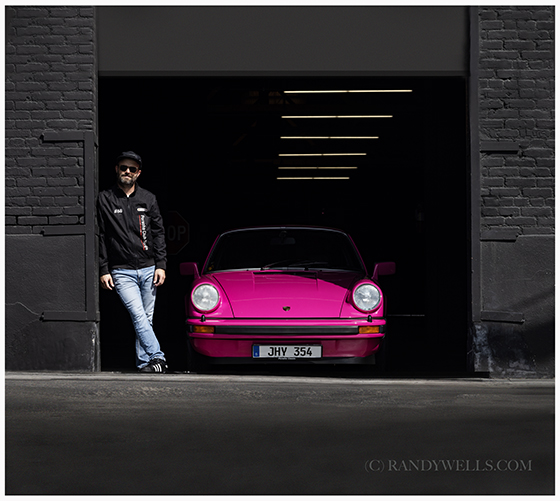
THE EARLY 911, FILM AND VINYL –PART 3
So why do those who cling to artifacts from the past continue their quest for experiential freedom? Well, for one there is a considerable amount of “feel” connected to these arguably archaic hobbies of vintage sports cars, film and vinyl. The pursuit of these involvements is more art than science. It’s not pure instrumentation and technology that will get you all the way there. Intuition and a willingness to be open to a non-black and white world are often necessary to achieve that elusive bliss these fans strive for. The pay off is a feeling of satisfaction when the visceral pleasure of playing a great LP, using a mechanical rangefinder, or driving an early Porsche 911 well is truly experienced. Even ordinary tasks become part of the appeal of caretaking something so old, unique and inherently valuable.
Some would say that it is in the actual use of the vintage Porsche where the largest differences become apparent. The mechanical fuel injection of a ’72 911S allows for throttle response that a drive-by-wire modern day Porsche can only dream of. Want to rotate the car mid-corner? Simply lift off the accelerator pedal and the back end comes around. Then it’s back on the throttle for a power slide that’s not inhibited by a computer chip that thinks it’s smarter than you are. With the latest offerings from Porsche, there are so many automated drivers aids that the pilot is left with little to do except ponder grand touring and the accompanying modern day conveniences - like GPS systems and cup holders. In reality, these current day “sports cars” are so capable it’s hard to notice that they weigh over 3,000 pounds! In contrast, an Early 911 allows one to revel in its handling limit while still remaining under the speed limit. A new GT3 needs to be taken to the track to experience what is possible with that car, but if the driver’s skill is not up to the task and they run out of grip… well the car will probably be traveling too fast to stop a major off.
In the vinyl world much of the above rings true. A high-end turntable allows for many performance advantages and upgrades over even the best CD players. LPs continue to be the high-res medium of choice for many audiophiles. For them, there is a warmth, richness, and presence to vinyl playback that eludes most 16-bit CD mastering. Feel like tweaking a CD player? Not that easy I’m afraid. How about viewing the album’s artwork? Bring your magnifying glasses out if you want to read a disc’s booklet. In my experience, the visceral experiences of analog are simply lacking in the digital realm. When you consider the focus required to properly set up a table, research the best sounding vinyl and really extract all that’s hidden in the grooves of a well crafted LP, the subtle variations of this hobby are simply amazing.
Extraordinary in their flexibility, simple in design and execution, yet incredibly rich in potential – vintage cars, rangefinder film cameras and analog playback are actually closer to one another than you might imagine. Temporal mediums all, these old-school pursuits have a tangible “in-the-moment” charm that’s undeniable. It’s not surprising then that many developers of the best turntables available today favor older sports cars. These folks believe that retro designs are simply more organic and reward the senses in a way that newer technologies cannot quite approach. Debating whether this viewpoint is right or wrong is missing the point. While exploring these leisure time pleasures can be challenging, it’s hard to argue that the experiences lived along the way can bring a joy and fulfillment that’s unmatched by more convenient paths. For some it still remains the journey that counts. Maybe you too have found that getting there can be half the fun – heck for some it’s the only thing that matters. Enjoy a blast from the past if you can!
Randy Wells
This article appeared in the Spring 2010 issue of the enthusiast magazine ESSES. For more on the early Porsche 911, you can visit their site: http://www.early911sregistry.org/
June 2nd, 2010

THE EARLY 911, FILM AND VINYL - PART 2
My history with cameras is remarkably similar to that for early 911s. I learned to photograph and develop my own black and white film in 1977 with a German made Leica M3. That first rangefinder camera led to the use of numerous film-based Leica cameras and lenses, which have a smoothness and mechanical precision missing from many other models. I still love using the Leicas for their purity, quiet shutter and silky film advance lever. However I’ve made Canon digital SLRs my choice for most subjects since photography has become my profession.
My audio hobby had taken a similar course. By the mid 80’s, original LPs were occupying my interest - The Beatles, The Who, The Rolling Stones, Pink Floyd, Led Zeppelin, you name it – I was buying whatever LPs the new CD converts were selling. My turntable and audio system continued to improve over time, and eventually I ended up with a top-of-the-line Rega turntable matched to VTL tube electronics and big planar speakers. For everyday listening, CDs fit the bill. But for the times when I really want to savor my audio system, vinyl rules the roost.
Having lived with Early 911s, Leica rangefinders and a vinyl based audio system for over a decade; I can tell you that each of these require more commitment and care than their modern day equivalents. For example, a Porsche 997 demands much less maintenance, and when parts do wear out new factory parts are easily available. Similarly, CD players are essentially plug and play requiring little attention, and digital cameras are inevitably replaced every few years due to rapid advances of technology. Yet for many enthusiasts, especially those from the “baby boom” generation, continuing to use vintage technology has proven more satisfying than living within the confines of a world determined by convenience.
There is a built-in ritual to enjoying these artifacts from the late 60’s that is ultimately engaging. Unlocking the car door by hand, loading a roll of film, and preparing a turntable are just the beginning. Pull up the hand throttle, advance the shutter with your thumb, clean the stylus – then warm up the motor, manually focus the lens, and cue up an LP. These old school pastimes are quick to let you know when you are doing something wrong and are equally ready to reward you when you are doing it right. At times it seems like these “dinosaurs” from the past defy the laws of physics. How does a rear-engined air-cooled sports car stay on the road without oversteering into the bushes in a hot molten mess? How does a shard of diamond trace the grooves of a fragile vinyl record without ruining it? And how does a camera that fits in your jacket pocket take pictures that rival or surpass those made with the best full size 35mm SLRs?
Still, there is no denying that “hassle free” is not an adjective applied to these pursuits. Old Leica cameras need to be exercised and periodically lubricated. Vinyl records have to be cleaned and handled carefully. The turntable you play them on needs to be aligned and leveled, and the phono cartridge needs to be periodically set properly or replaced. Just the right suspension is needed to allow for the fullest performance and experience – as is true for the Early 911, which needs periodic alignment and suspension service. Parts wear out, can be hard to find, and NOS stuff can get expensive. Not to mention non-galvanized metal rusts badly when it gets wet. It sometimes seems like it never ends…
Part 3 to follow
June 1st, 2010

THE EARLY 911, FILM AND VINYL – PART 1
You’ve probably read enough analogies of sports cars, fine cameras and luxury audio equipment in high-end lifestyle magazines to get the idea that journalists are passionate about these in a big way. I’m not immune and vinyl records, Leica rangefinders and Porsche 911s have been a primary fascination of mine since 1964. That’s when I bought my first LP, was gifted a camera, and was introduced to the early 911. I immediately fell in love with the feel and sound of the long playing record, the shutter advance of the film camera, and the Porsche 911’s hooligan nature with its air-cooled flat six barking a nasty exhaust note. School and financial obligations kept me from fulfilling my dreams of ownership for a long time, but I promised myself that someday I would have a top notch analog stereo system, a Leica M series rangefinder, and a pre-‘74 911.
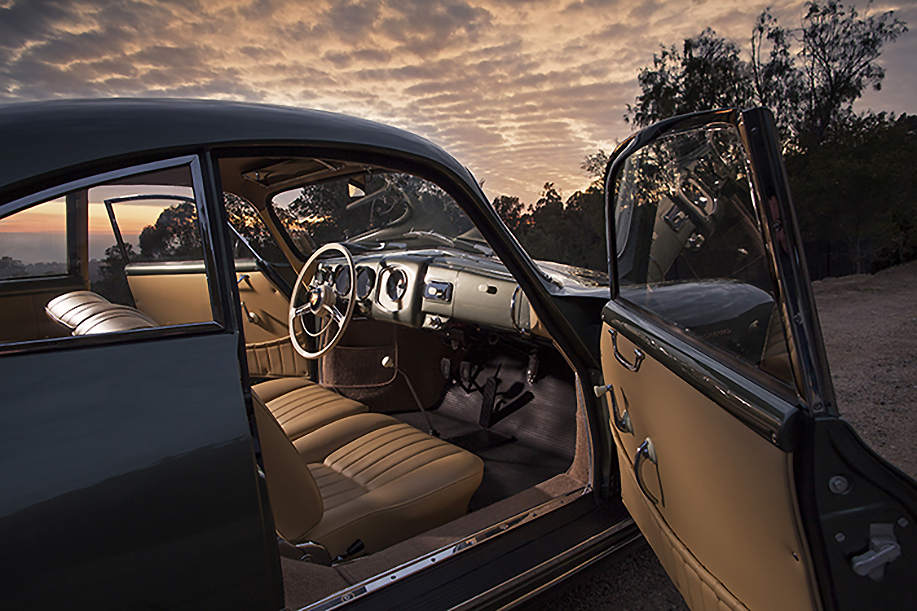
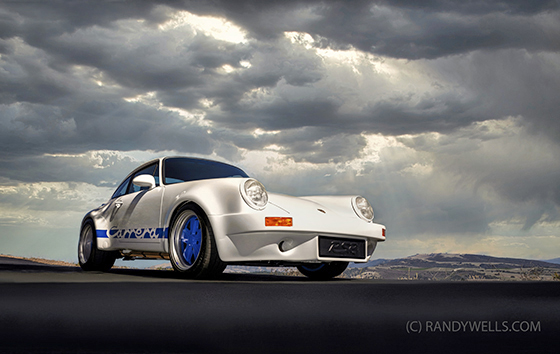
Let’s turn our attention first to the Early 911. Just to review what you undoubtedly already know: These fabled Porsches were hand built by craftsmen in Stuttgart Germany between 1964 and 1973. They are exquisitely formed, simple to work on, very functional and lack the smog regulation of later sports cars. They also have a power to weight ratio that was not surpassed until the 1976 Turbo. At less than 2200 lbs and up to 210 HP available, they are both quick and nimble. Accelerating out of an uphill bend with all that mechanical intake noise behind you is a hoot, and the simple exhaust system’s raspy wail is an added bonus. The pure aesthetics, chrome trim and dainty bumpers of Butzi Porsche’s original design are traditional features that make Early 911s the preference of many enthusiasts. They are arguably among the best of the late 60’s and early 70’s automotive icons - true sports cars, not the civilized grand touring types that many marques would later become.
It wasn’t until 1997 that I purchased my first Early 911 - a 1972 911S coupe in metallic blue. It had 48,000 originals miles and had been well maintained by three previous owners. In the words of another Porsche enthusiast, I wanted a “light, visceral, scary, nasty, feels-like-an-accomplishment-to-drive sports car without anything to interfere with my sensory experience” and that’s what I got. No power steering, no ABS, no stability management, no traction control, and minimal sound deadening. I drove this ‘72S to dozens of track events, competed at numerous autocrosses, and toured from Seattle to California via back roads four times over the next eight years. Along the way I also learned how to repair it and find original parts when they needed replacing.
Part 1 of 3
May 18th, 2010

MT. ST. HELENS BLOW OUT ANNIVERSARY
Thirty years ago today, Washington state’s Mount St. Helens had its catastrophic eruption. It was the most destructive volcanic event in the history of the United States. Fifty-seven people were killed, and 250 homes, 47 bridges, and 185 miles of highway were destroyed. The eruption spewed ash for hundreds of miles and caused a massive debris avalanche, reducing the elevation of the mountain’s summit some 3,000 feet from its prior height of nearly 10,000 ft. The resulting crater, dust covered surface, and barren fir trees made for an eerie lunar like landscape. In 1982, President Ronald Reagan and the U.S. Congress established the Mount St. Helens National Volcanic Monument. Following the 1980 eruption, the area was left to gradually return to its natural state. When you consider this area has been a center for volcanic activity for 37,000 years - it’s worth a visit. Many trails, viewpoints, information stations, campgrounds, and picnic areas have been established to accommodate the increasing number of visitors each year. Check out Windy Ridge or the monument’s visitor’s center at Silver Lake for more info on where to photograph.