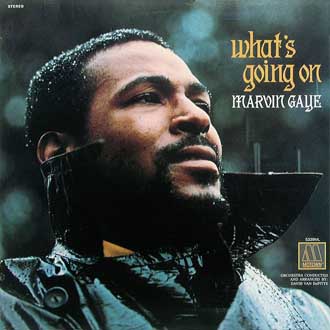
Forty years ago in March of 1970, Marvin Gaye fell into a deep depression following the death of his singing partner and fellow Motown artist Tammi Terrell. By June he had somehow gathered enough courage to record the soulful yet politically charged single titled ”What’s Going On”. Motown Records CEO Berry Gordy objected to the material and refused to release it because he considered it both too controversial for radio and too musically unfamiliar to be a commercial success. A resolute Marvin Gaye stood his ground as he did not want to be restricted by Gordy’s ideas. Continuing to lobby his case to label executives, Gaye’s single was finally released in January 1971 and immediately went to the number one spot on the R&B charts for five weeks. Seeing the promise in this revolutionary music, Motown approved more songs to be recorded and soon the thematic album What’s Going On was released to critical acclaim almost a year after the single was recorded. The beautiful thing about this album is its use of linked songs with both jazz and classical elements that make it much more than a Motown chug along. Social concerns that still exist today, like political corruption, war, racism, pollution and addiction, were creatively highlighted throughout the album and blended together into a song cycle unlike any that had been heard before. Because there were no break between songs, the album did not lend itself to airplay but DJs still played the single and soon the album was climbing the charts where it remained for over a year. Twelve years later (one day before his 45th birthday), Marvin Gaye was killed when his father shot him after an argument. The recently released MFSL re-mastered hybrid SACD/CD and LP of this cohesive concept album sonically surpass any previous version, so if you are a fan be sure and pick this up.
“Do not paint the sleeve, become the arm.” -Andrew Wyeth
“The limitations of your photography are in yourself, for what we see is only what we are. You must be totally yourself, or you will see with someone else’s eyes.” -Ernst Haas
“In order to see, we must forget the name of the thing we are looking at.” -Manet
“Every child is an artist. The problem is how to remain an artist once you grow up.” -Picasso
“The only difference between a rut and a grave is the depth.” -Ellen Glasgow
“Life shrinks or expands in proportion to one’s courage.” -Anais Nin
“The fruit is out at the end of the limb.” -Anonymous
“As you simplify your life, the laws of the universe will be simpler.” -Thoreau
“You can’t stop the waves, but you can learn to surf.” -Anonymous
“Trust in God, but tie your camel.” -Old Arab saying
“The more personal you make it, the more universal it becomes.” -Deanne Delbridge
“If you don’t feel it, no one else will.” -James Wood
“In the middle of difficulty lies opportunity.” -Albert Einstein
“The success with which an artist is able to conceal the source of his inspiration, is the measure of his originality.” -Man Ray
“Photography deals exquisitely with appearances, but nothing is what it appears to be.” -Duane Michals
“Avoid choosing, because what we often resist is what we most need” -F. Franck
“Do not fear mistakes, there are none.” -Miles Davis
“To make an omelet, you need to break some eggs.” -Joseph Campbell
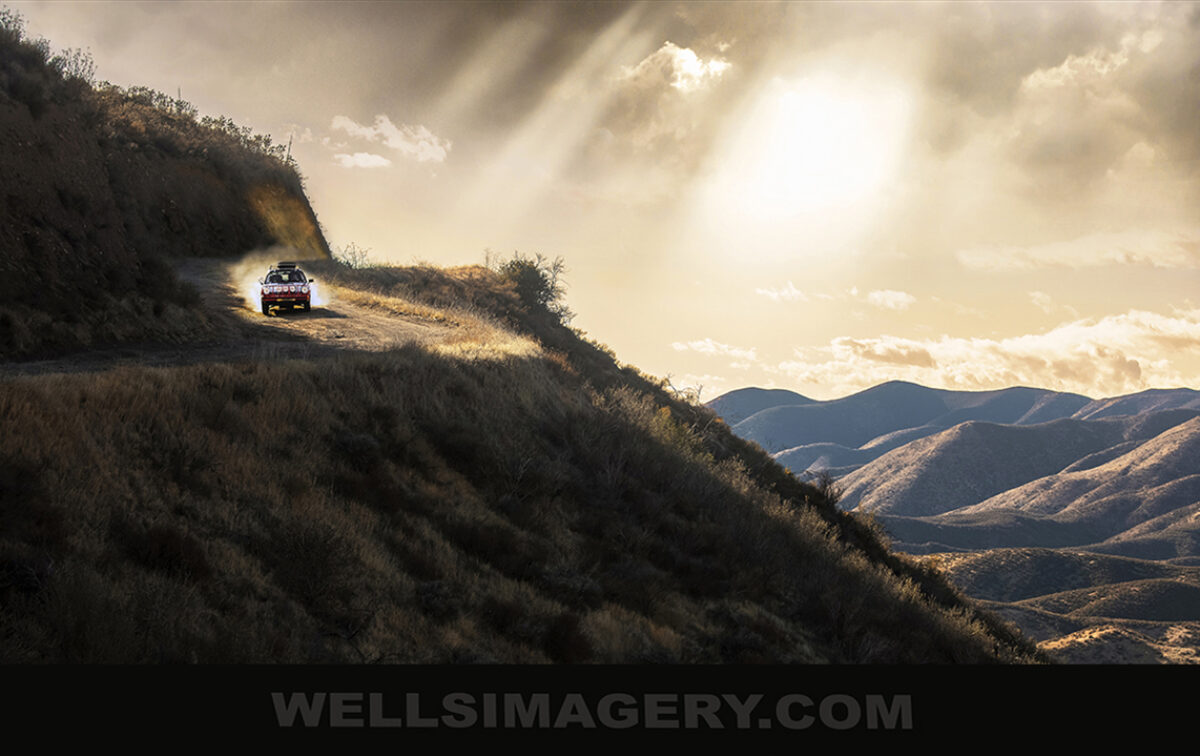
Want to see what it feels like to be a passenger in a track prepared GT3 driven by a professional driver? This short Porsche advertisement will do the job:
This time of year my mind begins to wander to warmer climates like southern Florida. Places like Key Largo and Key West recall memories of Humphrey Bogart, Ernest Hemingway and Jimmy Buffet. The word “Key” comes from the Spanish “Cayo” meaning small island. And true to its origin, this tiny string of islands connected by bridges separates the Atlantic from the Gulf of Mexico. January and February are the best times to visit the Keys – hurricane season and the holidays are over, but spring break has not yet started. It’s quiet and temperatures are cool: mid 70’s during the day and 60’s at night. There are many unique plants and animals here, and the tropical climate ensures that something is blooming all year round. Key West, once known for its shipwrecking and drug smuggling, has become an easygoing oasis of fun loving aquatic activities such as diving, fishing and boating. This is the heart of southernmost Florida tourism with destinations like Hemingway’s old house (and bars) and Stinson’s beach. Don’t forget to check out the sunset scene at Mallory Square. And be sure to visit one of the wonderful nearby parks like Bahia Honda or Fort Jefferson in the Dry Tortugas. If you are tired of the snow, cold or rain that plagues most of the US this time of year, and you have some air miles to burn… Why not escape and soak up some rays, eat a cheeseburger in paradise and become a part of the “Conch Republic” for a few days!
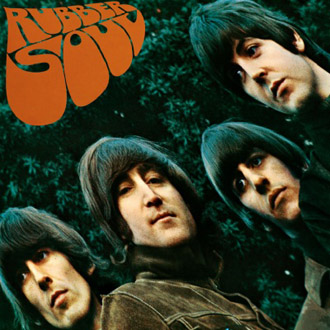
Released in December 1965, Rubber Soul presented an evolved Beatles sound to the world that was closely associated with the American folk rock of Bob Dylan and The Byrds. With the help of producer George Martin, Brits John Lennon, Paul McCartney, George Harrison and Ringo Starr built an album that went beyond a bunch of well-crafted pop songs. Using speeded up tapes, electronic processing, fuzz bass, and ambiguous lyrics - not to mention a stretched cover photograph by Robert Freeman - the Fab Four were pushing the boundaries with their newfound artistic control. The Beatles stood at the crossroads and created plastic soul. No longer a collection of singles, this album hinted at the experimentation to come on Revolver and Sgt. Pepper. This was also the first Beatles album to include compositions by all four members with no cover versions. Yet it still retained some of the innocence of earlier releases. Rubber Soul will forever go down in the record books as introducing the Indian sitar to popular music and inspiring Brian Wilson of The Beach Boys to produce his own thematic masterpiece, Pet Sounds.
It’s well documented that UK pressings of The Beatles LPs are among the better sounding versions, as well as being the most authentic. Unfortunately on this side of the pond, Capitol was busy manipulating the Beatles output in the 60’s for their own purposes. Up until Rubber Soul, the US label had changed the title and/or cover for every Beatles album. They also cut their records from EMI copy tapes, which in some cases were reprocessed to sound like the Beatles were playing in an echo chamber. Capitol’s version of Rubber Soul also suffered somewhat from this reverb treatment, however it could be argued that the US track listing is superior to the UK in its sequencing and selection. The addition of “I’ve Just Seen a Face” and “It’s Only Love” from the UK album Help, and the deletion of upbeat tracks like “Drive My Car”, “Nowhere Man”, “If I Needed Someone” and “What Goes On” did create more of a acoustic folk flavor to the album, even if it changed The Beatles’ intentions.
There is also the choice of mono and stereo releases for this album to consider. Although entertaining, the stereo mix of Rubber Soul, unlike the earlier and later Beatles four-track recordings, is an experiment gone wrong in my opinion. Lead vocals are panned hard right, and most of the musical instruments are placed hard left. So, unless you are into karaoke or playing rhythm guitar along with the Beatles voices, I’d concentrate on the mono version – which is what I will do here.
With its glossy heavily laminated cover photograph of the four lads in brushed suede jackets and longish locks, a flip-back original mono UK Rubber Soul album (PMC-1267) is a piece of art. No group name appears on a Beatles cover for the very first time, and the brown pop art font style used for the title is perfectly in tune with the swinging ‘60’s. Sliding a heavyweight Y/B Parlophone labeled record out of its Emitex lined inner sleeve is a welcome ritual, and listening to a –4 tube cut mono LP on a high-resolution system is a wonderful experience. With centered lead guitar and vocal tracks featured strong in the mix, a connection to the music exists that’s simply not possible when listening to the stereo mix. Overall balance on this pressing is excellent with tonality that is rich in texture. “Drive My Car” featuring John’s tambourine and Ringo’s drumsticks, is reproduced with believable clarity. And on “Norwegian Wood”, realistic sitar and guitars ring out with convincing natural reverberation. This pressing really shines on the more complicated tracks like “Think For Yourself” with its layered vocals and distorted Rickenbacker bass. The later –5 tube cut mono LP is another good choice, especially if you have a system that is a bit reticent in the upper midrange. Compared to a –4 LP, the –5 has a slight midrange bump and a more extended treble. This works well on smooth tracks like “What Goes On”, but on denser tracks like “Norwegian Wood” it can sound a bit forward with the driving bass line becoming a little lost in the mix. These differences are minor however and only discernible on a high-resolution system. I’m not recommending the rare –1 “loud cut” LP simply because it is not as musical as the others. This pressing is called “loud” because when it was cut the music signal was sonically compressed, and the LP created seems louder when it’s played back (like many CDs produced today).
While the original Capitol Rubber Soul mono LP (T 2442) has that great line up of songs starting with “I’ve Just Seen A Face”, sonically it can’t hold a candle to the best UK and Japanese mono pressings. John’s autobiographical “In My Life” has George Martin playing keyboards at half speed then speeding them up on tape to sound like a mellotron. On this pressing, that effect is diminished because of compression. The sound of the drum kit also loses some realism in the same way. On tracks with minimal reverb, it sounds a lot like the loud cut –1 UK mono except that the treble is brighter and the upper midrange is somewhat edgy. It’s too bad there isn’t a better sounding vinyl pressing for this version, which is the one many baby boomers grew up with. A good sounding CD of this is available on a box set called The Beatles: The Capitol Albums Vol.2 (look for an SK1 number on the sticker for the true Capitol mono version). Recently, EMI re-mastered the mono UK Rubber Soul mix as part of a limited edition mono CD box set. This is a stellar release with sonics that rival the best vinyl pressings, so be sure and pick this up if you are a fan. There is even news of a future vinyl version of the mono box set. Happy listening!
15 SHOOTING TIPS FOR THE DIGITAL TRAVEL PHOTOGRAPHER
1. Work with the minimum amount of equipment.
2. Be totally familiar with all equipment.
3. Check all cameras and lenses before any shoot – remove dust from sensors and charge all batteries.
4. Take more batteries and digital media storage than you think you will need.
5. Know before you go: Research your location for favorable weather, events and icons.
6. Rest completely and eat little before shooting.
7. Check your histogram for exposure, then forget about the gear as much as possible.
8. Never say to yourself, “I’ll get it later.”
9. Listen to your intuition. Turn around. Look up.
10. Look for unusual lighting, perspectives, backgrounds, reflections, framing elements, details, symbols, and colors that accentuates the subject’s character.
11. Work slowly, remain open and flexible, pursue your own vision, go beyond expectations. Remember to have fun and photograph what appeals to you.
12. Practice using your position and the viewfinder to eliminate distracting elements at the edges of the frame and near your main subject. What you leave out is as important as what you leave in. Be descriptive without showing everything. Eliminate any contradictions in the image. Remember, the eye of the viewer will always go first to the area of brightest color. Place the horizon line thoughtfully. The above are most important when you are excited.
13. Compose formally and use a tripod when you can, but allow informality to take it to another place – to a picture that you can’t memorize.
14. Try to weave two or three photos together into one picture with layers of information.
15. Back up all images every day.
Also, periodically answer these questions in writing:
“What is the most important thing in my life?”
“At what times do I feel most alive?”
“What is my personal definition of photography?”
“Where would I like to be as a photographer?”
“What’s keeping me from getting there?”
“What are my greatest strengths and weaknesses?”
“What am I trying to say?”
“If I could make just one set of photographs what would it be?”
Here’s a short Porsche Ad that’s encouraging to see. I hope this is an indication of more factory involvement in racing. It would be wonderful to see a Porsche in the top tier LeMans class again. Maybe with Volkswagen’s Ferdinand Piech running the ship, we will see a return to the glory days of the 1970 season and others like it. Great clip in any event - short and sweet with a cool audio track:
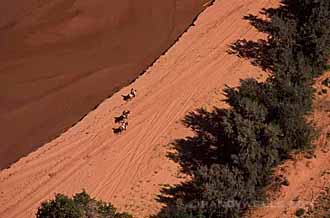
Ever since visiting these remote sandstone canyons in the ‘80’s, I have been in awe of their subtle and lasting beauty. The peacefulness of this 131 square mile landscape continues to haunt me to this day. It is located in northeastern Arizona within the boundaries of the Navajo Nation. This no-fee National Monument preserves pueblo ruins of the earlier indigenous tribes that lived in the area, including the Anasazi and Navajo Native Americans. The name Chelly is a Spanish use of the Navajo Tséyi, which means “canyon”. Canyon de Chelly is unique among National Park service units, as it consists entirely of Navajo Tribal Trust Land. Farming still takes place within the park, and it is one of the longest continuously inhabited landscapes of North America. Rock imagery adorns the soaring walls of the deep canyons, which have three major sections with two drives that overlook the ruins. Access to the canyon floor is restricted, but visitors are allowed to travel in the canyons when accompanied by a park ranger or an authorized Navajo guide. The exception is access to the White House Ruin Trail, which is a fairly moderate climb. The gently sculpted walls change color throughout the day, and the soaring spire called Spider Rock juts magnificently from the canyon floor. Even one view from the 1,000 ft. high cliffs will impress any visitor with the utter natural simplicity of this last stronghold of the Navajo people. Early Spring and late Fall are perfect times to visit Arizona and you can even camp near the entrance of the park. Have fun!
Compiling a personal music list of compelling albums can be a challenge. From the first song to the last – not many records hang together as a whole. This is one of the advantages of downloading singles – you only get to hear the good stuff. Unfortunately this practice tends to ignore the concept of the well-crafted thematic album that can transport you to a different place in less than 20 minutes. In producing this list I decided to include only those collections of songs that I enjoy listening to from beginning to end. I also kept each artist to just one release and made sure that each choice sounded really great on everything from an ipod to an audiophile system. Obviously, making such a list is very subjective. So, here’s a very personal list of 50 seminal albums that are successful for me musically, emotionally and sonically. Make your own list and enjoy rediscovering some satisfying lost classics!
Abbey Road – The Beatles
Kind of Blue – Miles Davis
Dark Side of the Moon – Pink Floyd
Who’s Next – The Who
Crime of the Century – Supertramp
Axis Bold As Love – Jimi Hendrix
Blood on the Tracks – Bob Dylan
Sticky Fingers – The Rolling Stones
I - Led Zeppelin
The Band – The Band
Déjà Vu – Crosby, Stills, Nash & Young
At the Fillmore East – The Allman Brothers Band
Tumbleweed Connection – Elton John
What’s Going On – Marvin Gaye
Every Picture Tells a Story – Rod Stewart
Stand Up – Jethro Tull
Rumors – Fleetwood Mac
Aja – Steely Dan
Stupid Dream – Porcupine Tree
Avalon – Roxy Music
Waltz for Debby – Bill Evans
Unhalfbricking – Fairport Convention
Darkness on the Edge of Town – Bruce Springsteen
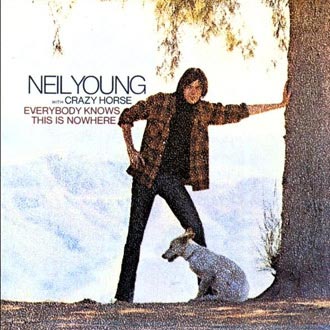
Harvest – Neil Young
Tea For the Tillerman – Cat Stevens
In the Court of the Crimson King – King Crimson
Rickie Lee Jones – Rickie Lee Jones
The Nightfly – Donald Fagen
Shoot Out The Lights – Richard and Linda Thompson
Veedon Fleece – Van Morrison
The Yes Album - Yes
Truth – Jeff Beck
Automatic For the People – R.E.M.
The Joshua Tree – U2
So – Peter Gabriel
Late For the Sky – Jackson Browne
Hounds of Love – Kate Bush
Hejira – Joni Mitchell
John Barleycorn Must Die - Traffic
LA Woman – The Doors
Whatever - Aimee Mann
America – America
Love Over Gold – Dire Straits
American Beauty – Grateful Dead
Unplugged – Eric Clapton
Bless the Weather - John Martyn
Barnstorm - Joe Walsh
No Other – Gene Clark
Pink Moon – Nick Drake
Sea Change – Beck
What inspires us to photograph in a more creative way? For some it might be the realization that we are seeing something beautiful for the first time. It might be as simple as falling in love with a subject, or connecting with a new country or culture. Maybe this inspiration is a reward for venturing outside of our comfort zone when we try out a new technique. For others, it might come from seeing a master photographer’s work for the first time or being forced to overcome some challenge that compels us to aspire to heights we haven’t reached for previously.
Having photographed professionally for 25 years, I’ve found all of these situations inspirational for me at one time or another. About five years ago, I was looking for a new inspiration to photograph more creatively. So, I pondered, what could be the catalyst that would light a fire underneath me? It turned out it was digital, it was a camera, and I never really saw it coming.
The phrase “just because you can do something, doesn’t mean you should,” echoed through my brain as I picked up my first professional digital SLR. I had experienced some of the potential shortcomings of digital as it relates to one of my other interests, music reproduction, and I wasn’t about to jump on the digital imaging bandwagon too soon. In reality, the problem turned out not to be so much about digital photography, but about my unwillingness to explore this new medium. Once I started working with my new tools (including the latest version of Photoshop), I found I could be even more original in my life’s work, and the process of expressing my feelings onto an image became even more fluid. Well-known nature photographer Jim Brandenburg has called digital photography more organic than film, and I agree. Here’s why:
1. Histogram: No longer do I need to be concerned about improperly exposing the image. With transparency film, there was always a need to bracket exposures and be vigilant of monitoring your exposure meter’s accuracy, not to mention your processing lab’s accuracy in developing the film. Now, using my digital camera’s histogram, I can be sure that my exposure is correct before I start to photograph in earnest. With no concerns about exposure, I can become creative much sooner in the photographic process than I ever did working with film. It’s one less thing to get in the way of involving myself in a subject completely. This total immersion in the moment is when great photographs are made, and I want to spend as much of my time photographing in that state as possible. Having the assurance of correct exposure with the histogram helps me do that.
2. The Review Monitor: Having the ability to review your progress in capturing an idea or feeling photographically is truly invaluable. It’s so quick and easy to check. On most digital cameras I can also check focus under extreme magnification on the monitor. I can shoot over my head or from ground level or experiment with motion blurs and be sure that I’m getting the shot before I leave the scene. In essence, I can work towards an idea and complete it knowing that I have it in the bag. In addition (and this is the even better part), I can be open to chance and follow another path off of my original idea when that direction becomes apparent to me while reviewing my progress in the review monitor. Awareness of other creative solutions in capturing a feeling on film has always been available to photographers. However, when you are able to review work en route the chances of discovering a new solution improves dramatically in a new and exciting way.
3. Economical Factors: When I was shooting with transparency film, I might have an idea that I could never be completely sure of capturing and be willing to risk only a couple of rolls of film. Now, I can not only experiment as much as I want (assuming I have enough memory and battery power on hand), I can also check my progress and keep shooting until I am satisfied with the actual results. The days of “hoping you got it, only to find out on the light table that you didn’t” are over. When shooting outside of your geographical area or under unusual lighting conditions, the advantage of digital cameras in this regard cannot be over-estimated.
4. Beyond the Camera as a Tool: Until now I’ve been focusing on the digital camera’s functions, but the irony is that once you become familiar with all the features, shooting digitally is less about the tool used and more about the result achieved. Because you see the image immediately, you know if you are on the right path to expressing how you feel about the subject. You cannot hide behind the tools used - you are faced with the image you just made, and it is either a good photograph or it is not. It is up to you to take the advantages of shooting digitally and make something out of it. Your passion (or lack of it) is staring back at you.
So, what have I discovered over the past five years? Well, it’s clear that shooting digitally is different than film, and there are certain advantages to each. With digital, the camera back becomes a reflection of what you see and how you see it – there is immediate feedback that can help you to be focused and more creative in your photography. Film has its advantages, and one of them is that you can’t easily delete an image of later significance in the field. I also miss some of the mechanical nature of the old cameras (more about this later). A balance between the intuitive and analytical is called for when shooting digitally. If you spend all your time checking your progress in the review monitor, you will not be open enough to inspiration. If you don’t take advantage of the immediate feedback of the monitor, you may miss a trigger for inspiration.
Photography has never been the same since pixels changed its face and the way that people communicate over the Internet, and that’s inspirational to me. Shooting with a digital camera has helped me realize how much photography is a reflection of who we truly are. That wonderful motto behind creating great images has never been more self-evident – “you see it when you believe it”. And now, with video capability being added to the new cameras, the possibilities for expressing your vision have become even more exciting.