PHOTO TIPS – PART III. CREATIVITY AND THE DIGITAL CAMERA: A LOOK BACK

For the third installment on photo tips – creativity and the photographic process I revisit my first professional digital camera in an article I wrote for PC Photo Magazine:

“What inspires us to photograph in a more creative way? For some it might be the realization that we are seeing something anew for the very first time. It might be as simple as connecting with a new country or culture. Maybe this inspiration is a reward for venturing outside of our comfort zone. For others, it might come from trying out a new technique, or viewing a master photographer’s work, or being forced to overcome some challenge that compels us to aspire to heights we haven’t reached for previously.

Having photographed professionally for almost 30 years, I’ve found all of these situations inspirational for me at one time or another. Several years ago, I was looking for a new inspiration to photograph more creatively. So, I pondered, what could be the catalyst that would light a fire underneath me? It turned out it was digital, it was a camera, and I never really saw it coming.

The phrase – just because you can do something, doesn’t mean you should – echoed through my brain as I picked up my first professional digital SLR. I had experienced some of the potential shortcomings of digital as it relates to one of my other interests, music reproduction, and I wasn’t about to jump on the digital imaging bandwagon too soon. In reality, the problem turned out not to be so much about digital photography, but about my unwillingness to explore this new medium. Once I started working with my new tools (a Canon DSLR, Lightroom 1.0, and the latest version of Photoshop), I found I could be even more original in my life’s work, and the process of expressing my feelings onto an image became even more fluid. Well-known nature photographer Jim Brandenburg has called digital photography more organic than film, and I agree. Here is why.

1. Histogram: No longer did I need to be concerned about improperly exposing the image. With transparency film, there was always a need to bracket exposures and be vigilant of monitoring your exposure meter’s accuracy, not to mention your processing lab’s accuracy in developing the film. Now, using my digital camera’s histogram, I could be sure that my exposure is correct before I start to photograph in earnest. With no concerns about exposure, I could become creative much sooner in the photographic process than I ever did working with film. It is one less thing to get in the way of involving myself in a subject completely. This total immersion in the moment is when great photographs are made, and I want to spend as much of my time photographing in that state as possible. Having the assurance of correct exposure with the histogram helps me do that.

2. The Review Monitor: Having the ability to review your progress in capturing an idea or feeling photographically is truly invaluable. It is so quick and easy to check. On my digital camera I could also check focus under extreme magnification on the monitor. I could now shoot over my head or from ground level or experiment with motion blurs and be sure that I am getting the shot before I leave the scene. In essence, I could work towards an idea and complete it knowing that I have it in the bag. In addition (and this is the even better part), I was able to be open to chance and follow another path off of my original idea when that direction becomes apparent to me while reviewing my progress in the review monitor. Awareness of other creative solutions in capturing a feeling on film has always been available to photographers. When you are able to review work en route, the chances of discovering a new solution improves dramatically in a new and exciting way.

3. Economical Factors: When I was shooting with transparency film, I might have an idea that I could never be completely sure of capturing and be willing to risk only a couple of rolls of film. Now, with digital, I can not only experiment as much as I want (assuming I have enough memory and battery power on hand), I can also check my progress and keep shooting until I am satisfied with the actual results. The days of “hoping you got it, only to find out on the light table that you did not are over. When shooting outside of your geographical area or under unusual lighting conditions, the advantage of digital cameras in this regard cannot be over-estimated. You also have more flexibility with digital in holding detail in the highlights and shadows when working in RAW.

4. Video Capability: With the introduction of DSLRs like the Canon 5dMk II (now MkIII) still photographers now have the opportunity to produce cinema quality HD video movies. This capability opens up tons of possibilities in creativity as well as marketing your work. The latest development is the $15K EOS-1D C Digital SLR Camera Featuring 4K High-Resolution Capture that allows simultaneous video and still recording at the highest quality. This technology will eventually trickle down to consumer cameras.

5. Beyond the Camera as a Tool: Until now I have been focusing on a digital camera’s functions, but the irony is this – once you become familiar with all the features, shooting digitally is less about the tool used and more about the result achieved. Because you see your image immediately, you know if you are on the right path to expressing how you feel about the subject. You cannot hide behind the tools used – you are faced with the image you just made, and it is either a good photograph or it is not. It is up to you to take advantage of shooting digitally and make something of it. Your passion (or lack of it) is staring back at you.

So, what have I discovered? Well, it is clear that shooting digitally is different than film, and there are certain advantages to each. With digital, the camera back becomes a reflection of what you see and how you see it – there is immediate feedback that can help you to become more focused and creative in your photography. Film has its advantages, and one of them is that you cannot easily delete an image. I also miss some of the tactile mechanical nature inherent in the old cameras (although a Leica M9 retains some of that). A balance between the intuitive and analytical is called for when shooting digitally. If you spend all your time checking progress in the review monitor, you will not be open to inspiration. If you do not take advantage of the immediate feedback of the review monitor, you may miss a trigger for inspiration.

Photography has never been the same since pixels changed its face and the way that people communicate over the Internet, and that is inspirational to me. Shooting with a digital camera has helped me realize how much photography is a reflection of who we truly are. That wonderful motto has never been more self-evident – you see it when you believe it. And now, with simultaneous still and motion capability being added, the possibilities for expressing your vision have become even more endless.”

Continue reading “”

THE DOORS ON 45 RPM VINYL

Check out the link below for a review by Michael Fremer on the new Analogue Productions release of the seminal The Doors first album.

Mastered by Doug Sax on 45 RPM 12″ LP and SACD from analog tape, and overseen by original recording engineer Bruce Botnik, this reissue is a killer diller. The only thing that might be better would be Sax cutting it from the master tape, but that’s apparently unusable. Yes, the original Elektra gold label LP with no RE in the dead wax pressed at Monarch is a little more “alive” since it was cut from the original master, but this one will still light your fire. Continue reading “”

CLUB SPORT

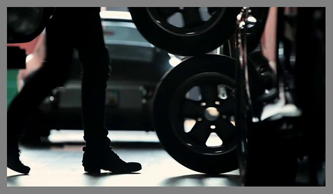
Excellence Magazine just published my article and photos on this outlandish Porsche 911. It’s one of 28 US delivered Club Sport 911s that was turned into a Porsche Club of America spec race car.

To many it might seem illogical to take a limited edition 1988 Carrera Club Sport in Dark Blue, one of only four made, and modify it for racing. But is it really that sacrilegious? Doesn’t ‘Club Sport’ suggest sports purpose club competition? Wasn’t the Porsche name originally built on its motorsports heritage? Isn’t the 911 the most popular car to use for PCA racing? Perhaps all that’s needed is to read the full story for it to make some sense. Continue reading “”

PART II. 15 TIPS FOR THE DIGITAL PHOTOGRAPHER

This is my second article in the creativity and photographic process series from 2012:

Many of these tips I credit to other photographers and authors, especially Ernst Haas, Sam Abell, and Deanne Delbridge.

1. Work with the minimum amount of equipment and be totally familiar with it. Consider exercising with your gear before a shoot.
2. Check all cameras, lenses and flash units before any shoot remove smudges from lens elements/filters, dust from sensors, and charge all batteries.
3. Take more batteries and digital media storage than you think you will need.
4. Know before you go: Research your subject and location for favorable concepts and backgrounds. Weather is a factor, but remember bad can be good.
5. Rest completely and eat little before shooting.
6. Check your histogram for exposure, then forget about the review monitor as much as possible.
7. Never say to yourself, I’ll get it later.
8. Listen to your intuition. Turn around. Look up. Place the camera on the ground or over your head.
9. Look for unusual lighting, perspectives, backdrops, foregrounds, framing elements, details, symbols, reflections, and colors that accentuates the subject’s character.
10. Work slowly, remain open and flexible, pursue your own vision, go beyond expectations. Have fun and photograph what appeals to you.
11. Practice using your position and the viewfinder to eliminate distracting elements at the edges of the frame and near your main subject. Remember, the eye of the viewer will always go first to the brightest, most colorful area.
12. Be descriptive without showing everything. Eliminate any contradictions in the image. Place the horizon line thoughtfully. The above are most important when you are excited.
13. Compose formally, and use a tripod when you can, but allow informality to take the image to another place, to a picture you can’t memorize.
14. Try to weave two or three photos together into one with layers of information.
15. Attitude is everything.

Also, periodically answer these questions in writing:

What is the most important thing in my life?
At what times do I feel most alive?
What is my personal definition of photography?
Where would I like to be as a photographer?
What’s keeping me from getting there?
What are my greatest strengths and weaknesses as an artist?
What am I trying to say?
“What does my dream job look like?”
If I could make just one set of photographs what would it be?

Part I

Part III

Inspirational Quotes

Digital Photo Pro Article with Randy

10 DAYS ON THE ROAD : BACK WITH A TROPHY

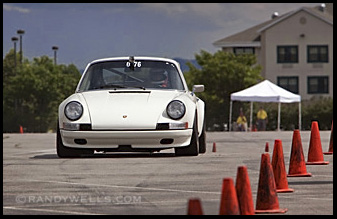
Just back from a road trip that will generate more photo stories for me in less time than any other. I traveled from Seattle to Salt Lake City and back again in my modified 1972 911 T/ST, about half of it on back roads.

The Porsche Club of America held its annual Porsche Parade event in SLC – a land of religious freedom and ultimate land speeds (some of it in in record-breaking heat). 110 degrees Fahrenheit is fine if you are sitting in your air-conditioned car. Unfortunately, I did not have that luxury. And neither did Jeff Barstow, my co-driver, when it came to laying down some fast runs at PCA national level autocross competition. Continue reading “”

WHEN LENNON MET MCCARTNEY

55 years ago, on the afternoon of July 6th 1957, a skiffle group called The Quarrymen played in the garden of St Peter’s Church in Liverpool. While setting up their equipment to play, the bass player, Ivan Vaughan, introduced the band to one of his classmates from Liverpool Institute, the 15-year-old Paul McCartney. John Lennon, lead singer and guitarist for the group, was one year older than McCartney. The pair chatted for a few minutes, and McCartney even showed Lennon how to tune a guitar. Continue reading “”

HAPPY 4TH OF JULY!

Congratulations to Bob Tilton on the 2nd anniversary of his WerkCrew blog site. It’s been a pleasure to be involved in his projects and to watch him grow as a photographer. The guy’s got a seriously good eye.

Werk Crew

Also, be sure and check out the “VPI Traveler Turntable and Dynavector Cartridge Giveaway” from Music Direct on Michael Fremer’s Analog Planet site. You could win a brand-new record spinner!

Analog Planet

Continue reading “”

SEEING THE WORLD THROUGH A NORMAL LENS

It’s been a long time since I’ve used a fixed focal length normal lens for stills (the first time was when I bought a Canon AE-1 in 1976). I have a 50mm f2 Summicron for my Leica M rangefinder, though I use it more for personal work. As a cineamatographer, I also use several fast fixed focal length lenses on my 5D MK II DSLR for motion filming. Continue reading “”

1960’S LAUREL CANYON, LOS ANGELES REVISITED

In 1969, the Aquarian themes of Woodstock (peace, love and music) were being played out on a smaller scale in the secluded Los Angeles neighborhood of Laurel Canyon, which is defined by a road that links Hollywood Blvd. to Mulholland Drive. Two years earlier Joni Mitchell had purchased a wooden cottage that had been built by a jazz musician into the side of a hill on Lookout Mountain Avenue. Several of the songs Mitchell wrote at the time, including the title track of her third album, were a direct result of her embracing that slice of bohemian counter-culture. Continue reading “”

randy_wells_road.jpg

ALL-AMERICAN ROADS

When America’s best scenic drives are discussed, a few always make the list. US Hwy 1 on the Pacific Coast is an obvious choice, as is Going-to-the-Sun Road in Montana. As amazing as these roads are, over 20 more are considered “All-American Roads” (see below), and one in particular stands out above all the rest as being both uniquely uncrowded and spectacular. Continue reading “”

beck_sea_change.jpg

FAVORITE ALBUMS

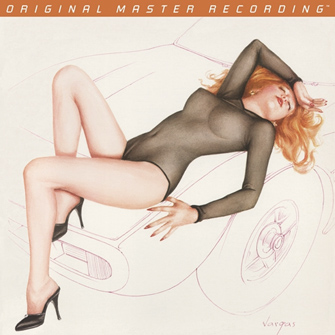
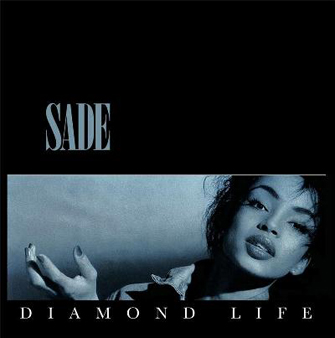
Compiling a personal list of favorite albums can be challenging. From the first song to the last – not many records hang together as a whole.

This is one of the supposed advantages of downloading singles. You get to hear just the “good stuff”. Unfortunately, the good stuff tends to change with time, and this practice tends to ignore the concept of the well-crafted thematic album that can transport you to a another place. Continue reading “”

PART I. PHOTO TIPS – THE FIFTH ELEMENT IN PHOTOGRAPHY

Over the next three months, I’ll be posting once a month about creativity and photography. Here’s the first installment:

There are many ways to look at photography. Like music, one can see it as an expressive art form that captures an always-changing continuum. If you break down a photograph into only four elements you will probably come up with something like this: light, form, line and color. The corresponding elements in nature are: fire, air, earth and water, like the points of a compass. Going further, the elements of man reveal another quad: heart, mind, body and soul. There is also a fifth element to consider – that of transition, moment, space and consciousness.
It is this fifth element that can elevate the common photograph to one that exceeds our expectations – to one we cannot memorize. What makes a memorable photograph is nuance – a subtle gesture that combines with colors and symbols to strike a universal chord in the viewer. The photographer who has a deep passion or connection with the subject is more likely to be ready when this appears in the viewfinder.

It is ultimately the viewer’s emotional response to an image that makes a lasting impression on the consciousness that transcends experience. Joseph Campbell once paraphrased Heinrich Zimmer as saying: “The best things in life are transcendent, the second best are misunderstood, and the third best are conversation.” It seems that even photographs can be put into philosophical terms, just don’t try to talk about it…

Continue reading “”